
Have you ever wondered why you keep repeating the same patterns—even when you consciously want something different?
You may decide to become more confident, disciplined, successful, healthy or peaceful. Yet, after some time, you find yourself returning to the same thoughts, emotions and behaviours.
Why does this happen?
One way of understanding it is through the relationship between the conscious mind and subconscious processes.
The good news is that many of our learned patterns can be changed. But meaningful change is usually not achieved by simply thinking positively for a few minutes. It requires awareness, repetition, emotional engagement and consistent action.
What Is the Conscious Mind?
The conscious mind is the part of your mental activity involved in deliberate attention, reasoning, decision-making and intentional thought.
For example:
- “I want to improve my communication.”
- “I will exercise regularly.”
- “I want to change my career.”
- “I choose to respond calmly.”
- “I want to develop better financial habits.”
These are conscious intentions.
The challenge is that knowing what you want and consistently behaving in alignment with it are two different things.
You may consciously want confidence while carrying an old belief such as:
“I am not good enough.”
You may consciously want success while subconsciously avoiding situations where you might fail.
You may consciously want change while unconsciously seeking the comfort of familiar patterns.
This is where understanding your deeper mental patterns becomes valuable.
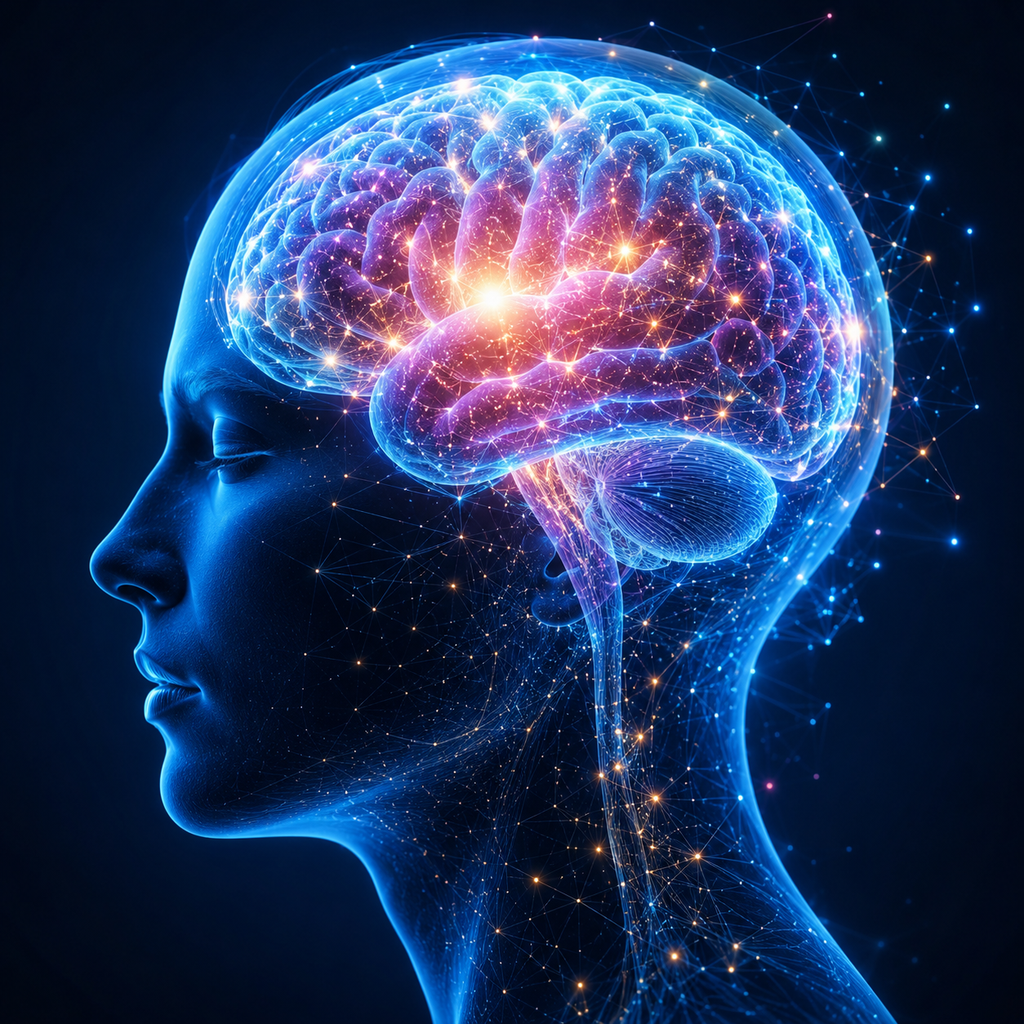
What Is the Subconscious Mind?
The term subconscious mind is commonly used in personal development to describe mental processes outside our immediate conscious awareness.
These processes can include learned associations, habits, emotional responses, memories and automatic patterns of behaviour.
Think about learning to drive.
In the beginning, you consciously think about:
Clutch → Gear → Accelerator → Brake → Mirrors → Steering.
With practice, many of these actions become automatic.
You no longer need to consciously think through every small movement.
This is the power of learning and habit formation.
The same principle can operate with thoughts, emotional reactions and behavioural patterns.
If you repeatedly experience or reinforce a particular response, it can become increasingly automatic.
Why Do We Repeat Patterns We Don’t Want?
Consider someone who repeatedly says:
“I want to become successful.”
But whenever an important opportunity appears, they think:
“What if I fail?”
They procrastinate.
They avoid taking responsibility.
They seek approval.
Eventually, they may conclude:
“Success is not for me.”
The problem may not be a lack of ambition.
It may be a conflict between conscious intention and established patterns.
This is why personal transformation begins with awareness.
Before changing a pattern, you need to notice the pattern.
Ask yourself:
- What situations repeatedly trigger me?
- What thoughts appear automatically?
- What do I believe about myself?
- What am I avoiding?
- What behaviours do I repeat even when I know they aren’t helping me?
- What did I learn about money, relationships, success and failure while growing up?
- Which beliefs are actually mine—and which ones did I simply inherit?
These questions can reveal patterns that normally operate outside our immediate awareness.
Can the Subconscious Mind Be Reprogrammed?
Yes—however “reprogramming” is better understood as changing learned patterns, beliefs, associations and habits rather than literally rewriting a computer program.
The brain is capable of learning and adapting throughout life. Repeated experiences and behaviours can strengthen or weaken particular patterns.
This process is closely connected with neuroplasticity—the brain’s capacity to change with learning and experience.
So instead of asking:
“How can I completely change my subconscious mind overnight?”
A more useful question is:
“What patterns am I repeatedly reinforcing every day?”
Because what you repeatedly think, feel, practise and do can influence what becomes familiar and automatic.
7 Practical Ways to Change Unhelpful Mental Patterns
1. Develop Awareness
You cannot change a pattern you don’t notice.
Start observing your thoughts without immediately judging them.
Instead of saying:
“I am an anxious person.”
Try:
“I am noticing an anxious thought.”
That small shift creates psychological distance between you and the thought.
2. Identify Your Limiting Beliefs
A belief is not necessarily a fact.
Write down an area where you feel stuck and complete:
“I cannot ______ because ______.”
Then ask:
“Is this absolutely true?”
“Where did I learn this?”
“What evidence supports it?”
“What evidence challenges it?”
This exercise can help you examine beliefs rather than automatically obeying them.
3. Replace Repetition With Intentional Repetition
If an old pattern has been strengthened through repetition, a new pattern also needs repetition.
Instead of merely saying:
“I am confident.”
Create an identity supported by action:
“I am becoming more confident by speaking up every day.”
Then take one small action that proves it.
Thought + Emotion + Action + Repetition = New Learning
4. Use Visualization Carefully
Visualization can help you mentally rehearse desired behaviours and outcomes.
Imagine yourself:
- handling a difficult conversation calmly,
- delivering a presentation confidently,
- following your daily routine,
- responding rather than reacting,
- taking action despite uncertainty.
The goal isn’t to magically make something happen.
The goal is to mentally practise the person and behaviour you want to develop.
5. Practise Mindfulness and Meditation
Meditation can create space between a thought and your reaction to it.
Instead of automatically following every thought, you learn to observe:
Thought → Awareness → Choice → Response
That space can become extremely valuable in personal transformation.
Meditation isn’t about stopping every thought.
It is about developing a different relationship with your thoughts.
6. Change Your Environment
Your environment constantly provides cues that influence behaviour.
If you want to read more, keep a book visible.
If you want to exercise, prepare your clothes beforehand.
If you want to reduce distractions, remove unnecessary notifications.
Don’t depend entirely on willpower.
Design your environment to support the behaviour you want.
7. Take Consistent Action
This may be the most important step.
A new belief becomes more meaningful when your behaviour starts supporting it.
If you want to become confident:
Speak.
If you want to become disciplined:
Follow the routine.
If you want to become a better leader:
Take responsibility.
If you want to change your career:
Learn and act.
Transformation happens when awareness becomes action.
How Long Does It Take to Reprogram Your Mind?
There is no universal number of days required to “reprogram” the subconscious mind.
Some habits can change relatively quickly. Others—particularly deeply established emotional or behavioural patterns—can take much longer.
The important question is not:
“How many days will it take?”
Instead ask:
“Am I consistently reinforcing the new pattern?”
Think of it like building a pathway.
The old pathway may be familiar because you’ve travelled it many times.
Every time you consciously choose a different response, you begin creating and strengthening another pathway.
Awareness → Practice → Repetition → Reinforcement → Change
How Do You Synchronize Your Conscious Intentions With Automatic Patterns?
This is where meaningful transformation happens.
Imagine your conscious mind says:
“I want to succeed.”
But your habitual behaviour says:
“Stay comfortable.”
There is an internal conflict.
The solution is not simply to repeat the goal louder.
Instead, bring the goal into your daily behaviour.
For example:
Goal
“I want to become a confident speaker.”
New behaviour
Speak for five minutes every day.
New evidence
“I am becoming better.”
Reinforcement
Continue practising.
Identity
“I am someone who communicates confidently.”
Over time, your intentions, behaviours and identity begin moving in the same direction.
What Triggers Our Automatic Responses?
Automatic responses can be influenced by many things, including:
- situations
- people
- memories
- words
- environments
- emotions
- sensory experiences
- stress
- repeated habits
- learned associations
Sometimes a reaction feels disproportionate to the present situation because the current event may remind us—consciously or unconsciously—of an earlier experience.
Learning to identify your triggers can give you an important choice:
React automatically—or respond consciously.
The Five Levels of Consciousness
Different spiritual, psychological and personal-development traditions use different models of consciousness.
There is therefore no single scientifically established “five-level” model that everyone agrees upon.
However, for personal-development purposes, we can think of a simple progression:
1. Unaware
You don’t notice the pattern.
2. Aware
You begin noticing your thoughts and behaviours.
3. Observing
You can watch your thoughts without immediately acting on them.
4. Choosing
You consciously select a different response.
5. Creating
You intentionally develop habits, behaviours and environments aligned with your values and goals.
The journey is essentially:
Unconscious Pattern → Awareness → Choice → Practice → Conscious Creation
Your Mind Is Not Your Destiny
One of the most empowering ideas in personal development is that your past can influence you without having to define your future.
Your experiences may have shaped your beliefs.
Your beliefs may influence your behaviour.
Your behaviour may create repeated results.
But once you become aware of the pattern, you gain an opportunity to make a different choice.
That is where self-leadership begins.
You may not be able to rewrite your past, but you can consciously participate in creating what comes next.
A Simple 5-Minute Daily Practice
Try this every morning or evening.
Step 1 — Observe
What thoughts are repeatedly appearing?
Step 2 — Identify
Which thought or belief is limiting me?
Step 3 — Reframe
What would be a more constructive and realistic perspective?
Step 4 — Visualize
Imagine yourself responding from that new perspective.
Step 5 — Act
Take one small action that reinforces the new pattern.
Do this consistently.
Don’t look for overnight transformation.
Look for small changes repeated consistently.
Final Reflection
Your mind contains patterns built through years of experience.
Some serve you.
Some no longer do.
The objective isn’t to fight your mind. It is to understand it.
When you become aware of your thoughts, beliefs, emotional triggers and habits, you create space for choice.
And when conscious choice is followed by consistent action, transformation becomes possible.
Know your mind.
Question your patterns.
Choose consciously.
Act consistently.
Create intentionally.
Your past may explain where you are.
It does not have to determine where you are going.
About Eminence
At Eminence Management & Training Consultancy, we believe that transformation begins with self-understanding.
Through Life Coaching, NLP, Career Guidance, Psychometric Assessment, Meditation, Leadership Development and Experiential Learning, we facilitate individuals in discovering their potential and taking conscious steps toward meaningful growth.
Eminence — Discover. Develop. Transform.